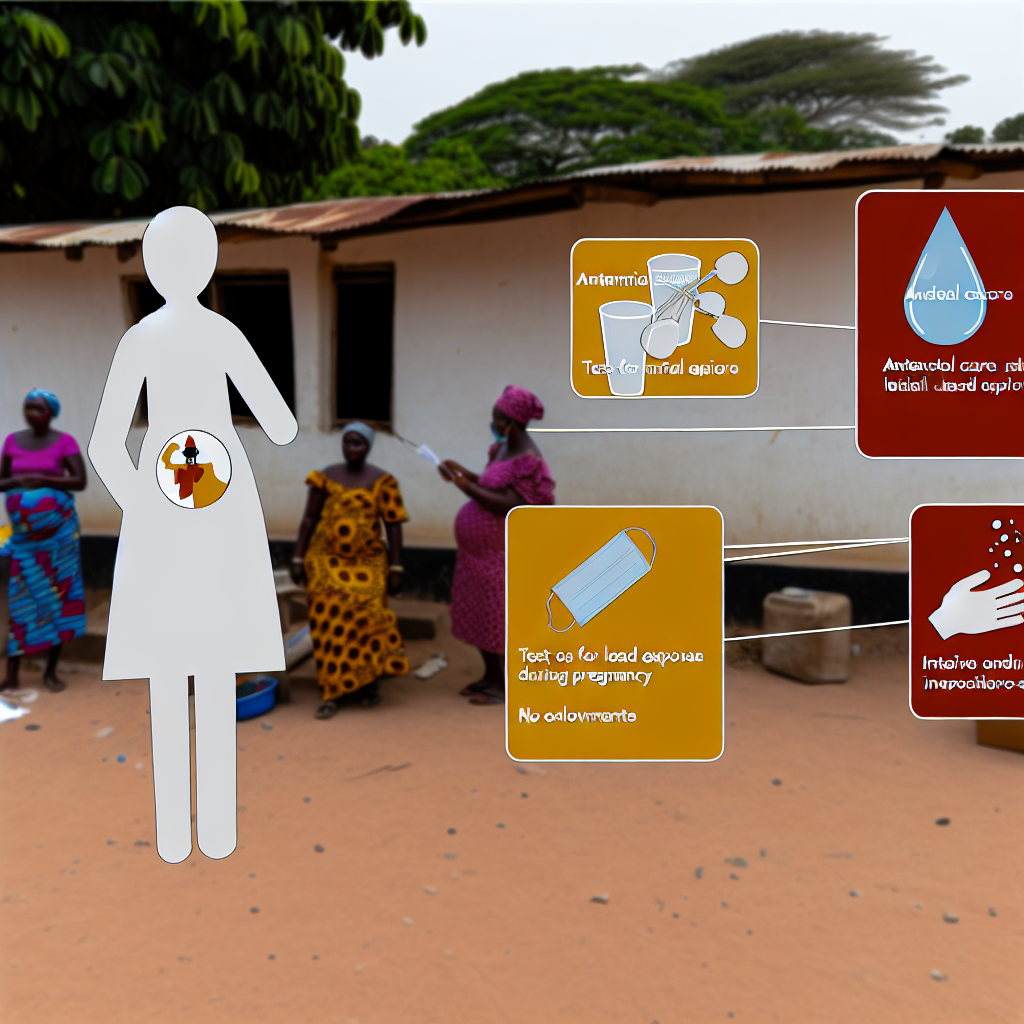
**Preventing Lead Exposure in Pregnancy: How Antenatal Care Helps Save Lives**
Did you know that thousands of pregnant women in Ghana face a silent threat every day?
That's right! Lead exposure is a big problem for many women who are expecting. When pregnant women are exposed to lead, it can harm their own health and the health of their unborn babies. But did you know that there's a way to prevent it?
Lead exposure can cause serious health problems, including anemia and even kidney damage. And if pregnant women have anemia, they might need a blood transfusion. But too much lead can also damage the kidneys and harm the baby.
That's where antenatal care comes in. UNICEF is working with the Ghanaian government and other partners to give pregnant women the care and support they need to stay healthy. By checking for and treating anemia during antenatal care, health workers can help prevent the need for blood transfusions. It's a simple but effective way to keep mothers and babies safe.
For example, [Fatima, a 28-year-old Ghanaian woman](https://www.unicef.org/ghana/stories/preventing-lead-exposure-pregnancy-antenatal-care-helps-mother-avoid-blood-transfusion), received antenatal care while pregnant. From there, doctors found that she had anemia. Her health team treated her, and she was able to have a healthy baby.
But there are still many women who don't get the help they need. That's why UNICEF is working to train health workers and provide them with the equipment they need to screen for lead and anemia. This can help more women like Fatima get the care they deserve.
Here are 5 things we can do to help prevent lead exposure in pregnancy:
* Screen for anemia and lead through regular check-ups at antenatal care
* Make sure communities have access to safe water and healthy food
* Use gloves and masks when working with lead-based materials
* Clean surfaces and toys safely to reduce lead dust
* Educate everyone about the risks of lead exposure and how to avoid it
You can help! You can donate to UNICEF, which helps women get the care they need to have safe, healthy pregnancies. Every contribution counts.
Donate now and help keep mothers and babies safe: [www.unicef.org/ghana/stories/preventing-lead-exposure-pregnancy-antenatal-care-helps-mother-avoid-blood-transfusion](https://www.unicef.org/ghana/stories/preventing-lead-exposure-pregnancy-antenatal-care-helps-mother-avoid-blood-transfusion)
linking More than 630 babies are born with lead exposure every hour.
Please Donate now so we can help our children and elderly. Any amount no matter how small once only or if you can, on a monthly basis. So many children will be so grateful for you!
Donate here!